
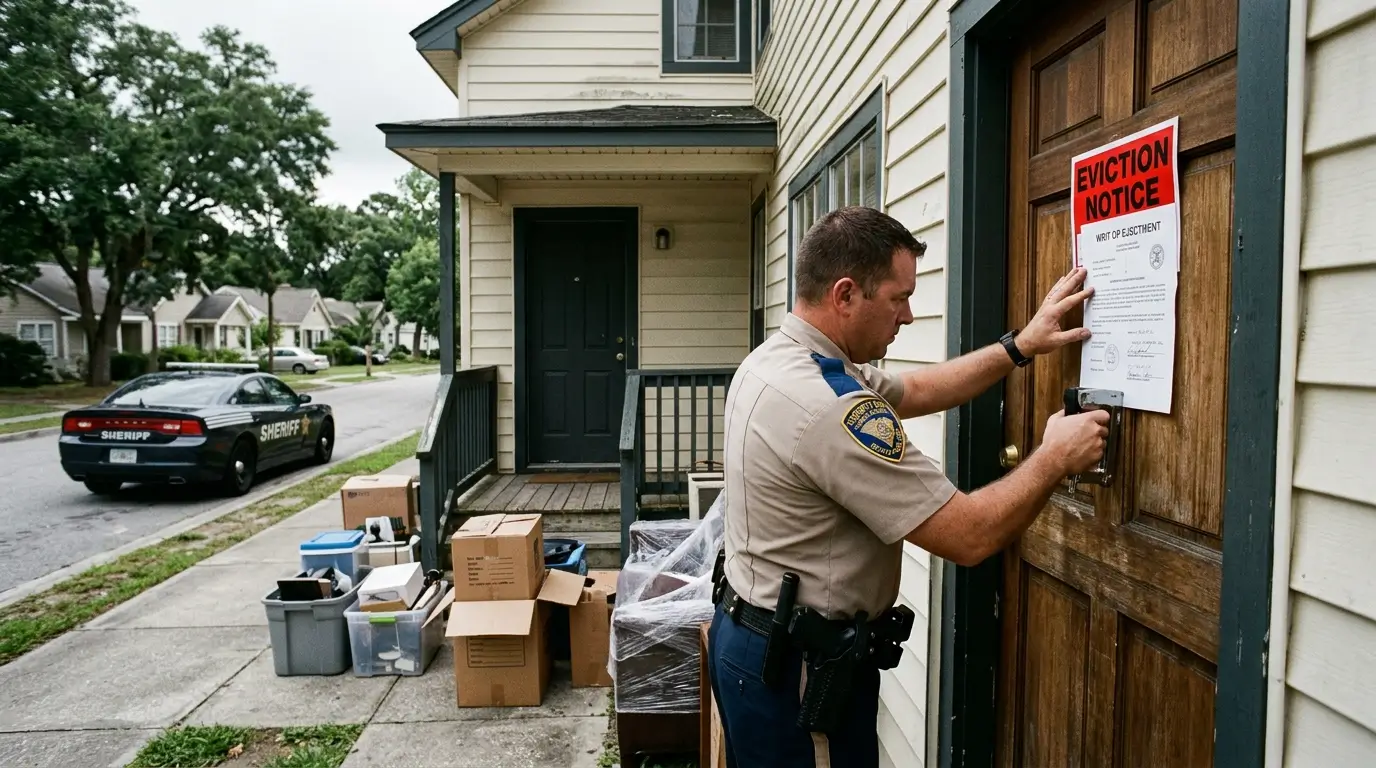
South Carolina doesn’t use the word eviction in its statutes. It calls the process ejectment, runs it through the magistrate’s court, and moves in a sequence that’s more predictable than many landlords expect. For owners with rentals scattered across the Midlands, from Chapin and Lexington to Columbia, Camden, and Sumter, the rules are statewide.
Key Takeaways
For unpaid rent, a landlord may terminate after five days, and the notice requirement is met if the lease contains the statutory conspicuous language.
Other lease violations require a written notice with a 14-day cure period, and ending a month-to-month tenancy takes 30 days’ notice.
The landlord applies to the magistrate, who issues a Rule to Vacate or Show Cause, and the tenant has ten days after service to respond.
A landlord’s win leads to a writ of ejectment within five days, and execution begins with 24 hours for occupants to leave.
Self-help is risky: an unlawful lockout can cost three months’ rent or twice actual damages, plus attorney’s fees.
Step One: The Right Notice for the Right Problem
The notice depends on the problem. For unpaid rent, S.C. Code § 27-40-710(B) lets a landlord terminate when rent isn’t paid within five days of the due date, provided the landlord has given written notice of nonpayment and the intent to terminate. South Carolina adds an unusual shortcut: that notice obligation is satisfied if the written rental agreement contains the statutory language in conspicuous type, stating that late rent is the tenant’s notice and no other will be given. Without that language in the lease, you need to serve a written notice each time. For other lease violations, the statute calls for a written notice describing the breach and giving the tenant fourteen days to remedy it. Under § 27-40-770, ending a month-to-month tenancy takes thirty days’ written notice, and a week-to-week tenancy takes seven. Pull your lease template now and confirm the conspicuous language is actually there.
Step Two: Applying in Magistrate Court
Once the notice period has run, the landlord, agent, or attorney applies to the magistrate. The South Carolina Judicial Branch publishes the standard forms, including SCCA 732, the Application for Ejectment, and SCCA 733A, the Rule to Vacate or Show Cause. Under § 27-37-20, the magistrate issues a written rule requiring the tenant to vacate or show cause within ten days after service. Filing fees vary, so confirm the current amount with the magistrate’s office in the county where the property sits.
Service follows the same rules as a civil summons. If the tenant can’t be found, the statute allows posting and mailing, but only after two documented attempts at least forty-eight hours apart and at times of day at least eight hours apart, with the clerk handling the mailing, and mailing completes service after ten days. A service defect can cost you time.
Step Three: The Ten-Day Window and the Hearing
If the tenant doesn’t appear within ten days, § 27-37-40 directs the magistrate to issue a warrant of ejectment. If the tenant contests, the magistrate hears the case like any other civil matter, and either side can demand a jury trial. Bring the lease, the notice or the lease language serving as notice, the rent ledger, and any communications. One detail landlords often miss is § 27-37-150: once the rule issues, rent keeps accruing at the same rate, and accepting rent doesn’t waive your right to ejectment or renew the tenancy. How you handle payments after filing is still worth running by your attorney.
Step Four: Judgment, Appeals, and the Writ
If the verdict is for the landlord, the magistrate issues a writ of ejectment within five days under § 27-37-100. A tenant can appeal, but under § 27-37-130 an appeal won’t stop ejectment unless the tenant posts an appeal bond, and if the bond isn’t filed within five days after service of the notice of appeal, the appeal is dismissed. Execution is the part most owners don’t expect. Under § 27-37-160, the constable or deputy presents the writ and gives occupants 24 hours to vacate voluntarily. If the home appears occupied but no one answers, the writ is posted, and 24 hours later a deputy sheriff, not a constable, may enter using the least destructive means possible.
What You Can’t Do
Self-help isn’t an option. Under § 27-40-660, a tenant who is unlawfully removed or excluded, or whose essential services are wilfully interrupted, may recover possession or terminate the lease and collect three months’ rent or twice actual damages, whichever is greater, plus attorney’s fees. The act also bars retaliatory ejectment after a tenant complains about a violation, and a tenant can raise the landlord’s own noncompliance as a defense.
A New Track for Squatters
On June 30, 2026, 2026 Act No. 252 took effect, adding Article 3 to the ejectment chapter. It creates a separate process for unlawful occupants, meaning people in a residential dwelling without the owner’s permission who have no legal right to be there. The owner or representative files a verified petition with the clerk of court or chief magistrate, and the court can issue an ex parte removal order for good cause, with a hearing within 24 hours of filing unless good cause delays it. Someone removed without just cause can sue for restored possession, actual damages, $1,000 in statutory damages, and costs. The key point for managers is that this track is not for tenants. The petition must state that the property wasn’t leased and the occupants aren’t current or former tenants. If anyone ever had a lease or rental arrangement, use the ejectment process above.
Keep the Paper Trail
Most eviction problems are paperwork problems: a lease missing the conspicuous notice language, a ledger that doesn’t match the application, a service attempt that wasn’t documented. Keep dated copies of everything, apply notices and late fees consistently, and make sure the amount you claim matches your ledger. Strong tenant screening reduces how often you’ll need any of this, our eviction protection handles the process if you do, and once a tenant is out, our guide to South Carolina security deposit law covers the next clock.
FAQ
How long does a tenant have after being served with the rule?
Ten days after service to vacate or to contact the magistrate to schedule a hearing and show cause why they shouldn’t be ejected.
Do I need to serve a separate notice before filing for unpaid rent?
Not if the lease contains the statutory conspicuous language. Otherwise you need to give written notice of nonpayment and your intent to terminate.
Can a tenant stop the writ by appealing?
Only by posting an appeal bond. Without one, an appeal doesn’t stay ejectment, and the appeal is dismissed if the bond isn’t filed within five days of service of the notice of appeal.
Can I use this process for a squatter who was never a tenant?
The 2026 law created a separate track for unlawful occupants who aren’t tenants. If the person ever had a lease or rental arrangement, the standard ejectment process applies.
Know the Sequence Before You Need It
South Carolina’s ejectment process is fast and procedural, which rewards landlords who prepare and punishes shortcuts. Each step has rules, and each is easier to follow when the paperwork is ready before a problem starts. If an eviction ever becomes necessary on one of your Midlands rentals, our Chapin property management team handles the process on your behalf and works to get the property back on the market quickly.